
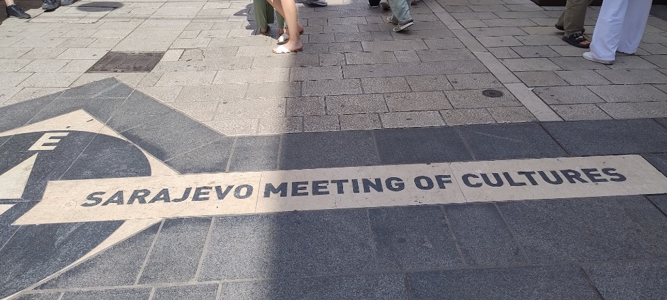
Una città divisa in due dove però si respira aria interculturale. E’ un confine immaginario a separare la parte austro-ungarica e ottomana di Sarajevo. Le culture si incontrano, si “annusano”, ma non si mescolano.
A city divided in two, yet one where an intercultural atmosphere prevails. An imaginary boundary separates the Austro-Hungarian and Ottoman parts of Sarajevo. The cultures meet, they ‘sniff each other out’, but they do not mix yet
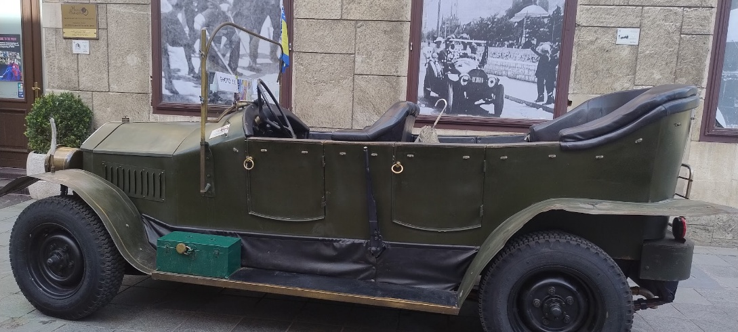
I palazzi in stile Viennese si affacciano dal tristemente noto ponte latino ed è ancora lì l’auto sulla quale viaggiava l’arciduca Francesco Ferdinando quel 28 giugno 1914. Il suo assassinio segnò l’avvio della Grande guerra.
The Viennese-style buildings overlook the infamous Latin Bridge, and the car in which the Archduke was travelling on 28 June 1914 is still there. His assassination marked the start of the Great War.
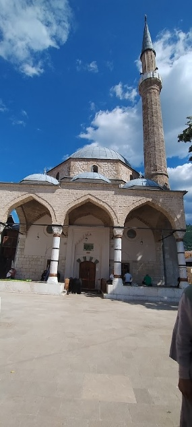
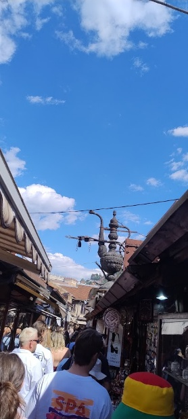
Elegante la Sarajevo austroungarica che contrasta con la più tipica parte ottomana piena di moschee. Una città dove al suono delle campane fa eco il richiamo alla preghiera dei Muezzin. E con un salto si passa oltre la linea di confine, piena di souk e locali tipici. Niente birra, né carne di maiale in questa parte della città.
The elegant Austro-Hungarian quarter of Sarajevo stands in contrast to the more traditional Ottoman quarter, which is full of mosques. It is a city where the sound of church bells echoes the muezzin’s call to prayer. And with just a short walk, you cross the border into a district full of souks and traditional eateries. There is no beer or pork sold in this part of the city.
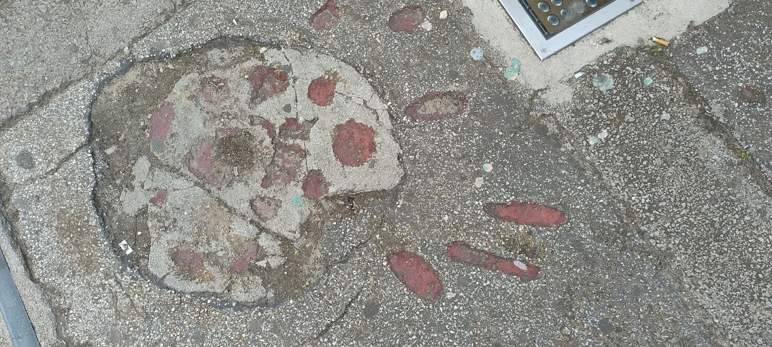
Sarajevo guarda avanti, ma non vuole dimentciare la guerra dei Balcani. Le rose di sarajevo sono lì a ricordare gli orrori della guerra, l’assedio più lungo della storia, che ha superato in giorni perfino quello di Stalingrado. I luoghi colpiti dalle granate provenienti dalle colline sono ancora lì ricoperti da una vernice rossa per non dimenticare.
Sarajevo looks ahead, but does not wish to forget the Balkan War. The roses of Sarajevo stand as a reminder of the horrors of the war – the longest siege in history, which lasted even longer than the Siege of Stalingrad. The sites hit by shells fired from the hills are still there, marked with red paint as a reminder not to forget.
Nelle immediate periferie della città i palazzoni costruiti ai tempi di Tito sono ancora crivellati dai colpi dei cecchini che conducevano il loro disgustoso “Safari” dalle colline vicine durante la guerra dei Balcani. 3 punti per ogni bambino colpito, 2 punti per una donna, 1 soltanto per la vita di un uomo. Ben 1.425 giorni di orrore, dal 5 aprile 1992 al 29 febbraio 1996.
Fu solo grazie al tunnel della speranza, scavato al di sotto della pista dell’aeroporto di Sarajevo, che gli abitanti della città martoriata riuscirono a resistere.
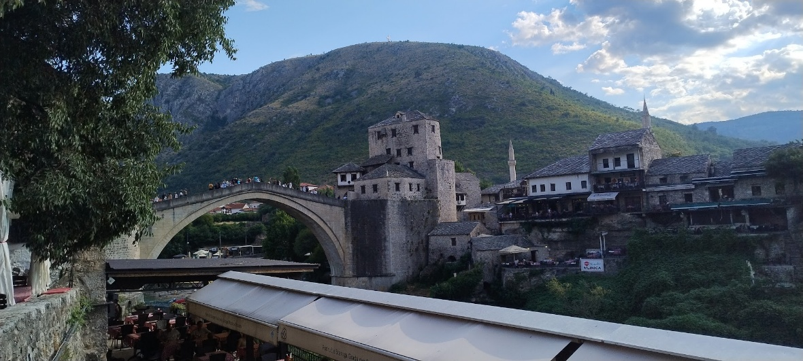
Sarajevo riesce ad entrarti nell’anima, ti risucchia nella sua storia così come Mostar, il cui centro storico, ristrutturato con maestria, è ora patrimonio dell’Unesco.
Lo Stari Most, fu distrutto il 9 novembre 1993 dalle forze croato-bosniache durante la guerra in Bosnia e ricostruito, grazie alla solidarietà internazionale nel 2004. È ancora il centro di gravità permanete di Mostar, non solo per sua bellezza architettonica, ma anche per le imprese dei folli tuffatori che sfidano il destino.
On the city’s immediate outskirts, the tower blocks built in Tito’s time are still riddled with bullet holes from the snipers who carried out their despicable ‘safari’ from the nearby hills during the Balkan War. Three points for every child hit, two points for a woman, just one for a man’s life. A full 1,425 days of horror, from 5 April 1992 to 29 February 1996.
It was only thanks to the Tunnel of Hope, dug beneath the runway at Sarajevo Airport, that the inhabitants of the battered city managed to hold out.
Sarajevo manages to touch your soul, drawing you into its history, just like Mostar, whose masterfully restored old town is now a UNESCO World Heritage Site.
The Stari Most was destroyed on 9 November 1993 by Bosnian Croat forces during the Bosnian War and rebuilt in 2004 thanks to international solidarity. It remains the permanent centre of gravity of Mostar, not only for its architectural beauty, but also for the exploits of the daredevil divers who defy their destiny
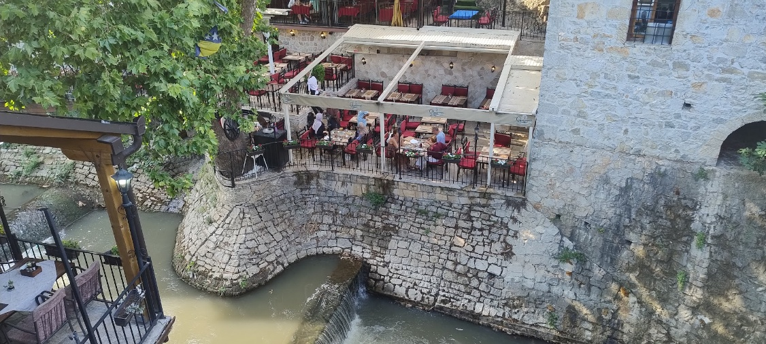
Il fiume Neretva è vissuto appieno dagli abitanti di Mostar, si affacciano sullo specchio d’acqua bellissimi localini e ristoranti. L’atmosfera anche qui è assolutamente ottomana.
The people of Mostar make the most of the River Neretva; there are lovely little cafés and restaurants lining the riverbank. The atmosphere here, too, is distinctly Ottoman.
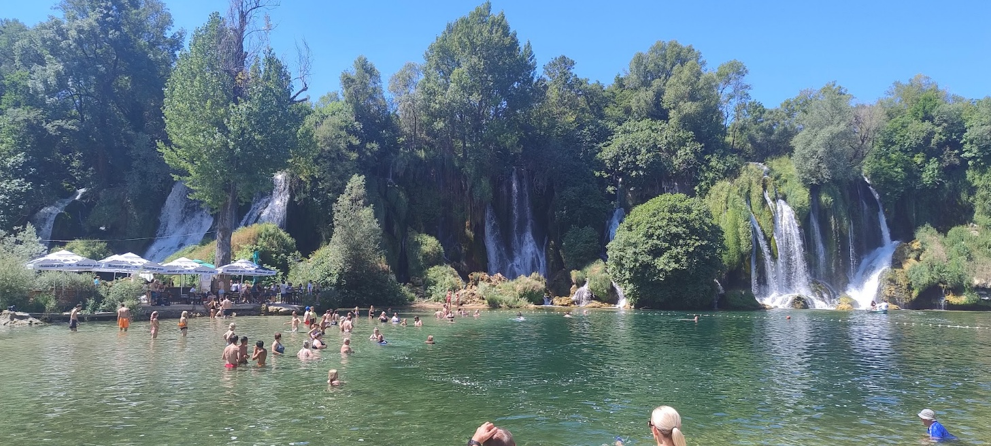
Ad un paio d’ore da Mostar si arriva diritti in paradiso. Non è facile descrivere a parola le cascate di Kravice. Potrei soltanto dire che corrispondono alla mia idea di EDEN
Just a couple of hours from Mostar, you find yourself straight in paradise. It’s not easy to put the Kravice Waterfalls into words. I can only say that they are exactly what I imagine EDEN to be
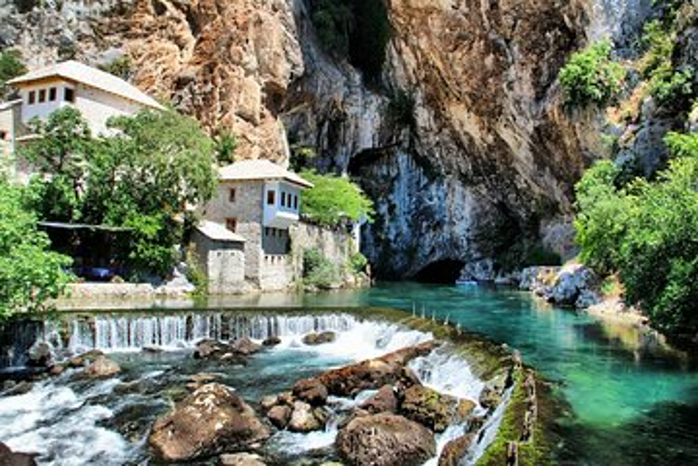
Non meno affascinate la cascata che incornicia il monastero di Blagaj luogo di preghiera dei Dervisci
No less charming is the waterfall that frames the monastery of Blagaj, a place of prayer for the Dervishes
Location
Sarajevo; Mostar; Blagaj