




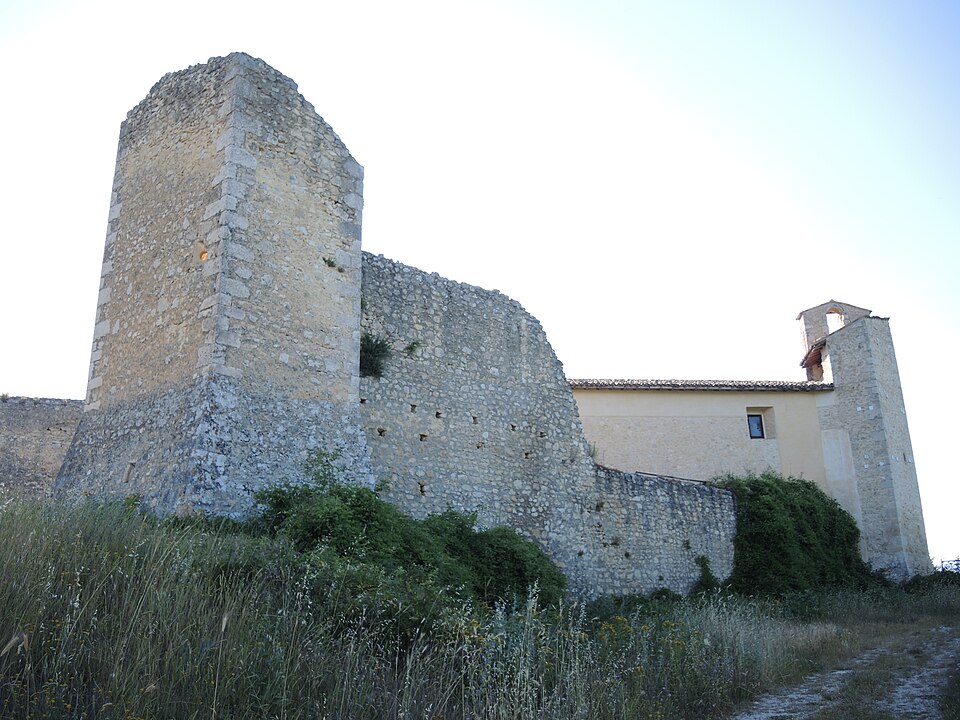
Nel cuore dell’Abruzzo interno, nel territorio di Prata d’Ansidonia, sorge il suggestivo Castello Camponeschi, una delle testimonianze più affascinanti dell’architettura medievale fortificata della regione. Non si tratta di un castello nel senso tradizionale del termine, ma di un vero e proprio borgo fortificato, costruito con una funzione difensiva e comunitaria.
Le origini e la storia
Il complesso risale al XIV secolo ed è legato alla potente famiglia feudale dei Camponeschi, tra le più influenti dell’Aquila medievale. La struttura si presenta come un recinto murario quadrangolare, con torri angolari e un unico accesso, progettato per proteggere la popolazione locale dalle incursioni.
All’interno delle mura si sviluppava la vita quotidiana: abitazioni, spazi comuni e attività produttive. Il castello rappresentava dunque un microcosmo autosufficiente, simbolo di sicurezza ma anche di organizzazione sociale.
Nel corso dei secoli, il borgo ha subito un progressivo abbandono, legato ai cambiamenti socio-economici e allo spopolamento delle aree interne. Tuttavia, proprio questo abbandono ha contribuito a conservarne l’impianto originario, rendendolo oggi un luogo di straordinario valore storico e culturale.
Il valore culturale e identitario
Il Castello Camponeschi è oggi un simbolo identitario per il territorio aquilano. La sua architettura essenziale e austera racconta una storia fatta di resilienza, comunità e adattamento all’ambiente.
Negli ultimi anni, il sito è stato al centro di interventi di recupero e valorizzazione, anche grazie all’attenzione crescente verso il patrimonio culturale delle aree interne e dei borghi minori.
Prospettive future: tra turismo e cultura
Nel prossimo futuro, il Castello Camponeschi potrebbe diventare un laboratorio di innovazione culturale. Le prospettive di utilizzo includono:
- Turismo sostenibile, con percorsi esperienziali e visite guidate immersive
- Eventi culturali, come mostre, festival e rievocazioni storiche
- Progetti educativi, legati alla didattica del patrimonio e alla media literacy
- Residenze artistiche, per artisti e creativi interessati al dialogo tra passato e contemporaneo
In un’epoca in cui si riscopre il valore delle comunità locali e dei territori marginali, il Castello Camponeschi può diventare un punto di riferimento per una nuova narrazione dell’Abruzzo: autentica, sostenibile e profondamente radicata nella sua storia.
Castello Camponeschi, back to the future
In the heart of inland Abruzzo, within the territory of Prata d’Ansidonia, stands the evocative Castello Camponeschi, one of the most fascinating examples of medieval fortified architecture in the region. Rather than a traditional castle, it is a fortified village designed for both defense and community life.
Origins and history
The complex dates back to the 14th century and is linked to the powerful Camponeschi family, one of the most influential noble families in medieval L’Aquila. The structure consists of a quadrangular walled enclosure, with corner towers and a single प्रवेश point, built to protect local inhabitants from external threats.
Inside the walls, everyday life unfolded: houses, shared spaces, and productive activities. The castle functioned as a self-sufficient microcosm, embodying both security and social organization.
Over time, the village was gradually abandoned due to socio-economic changes and the depopulation of inland areas. However, this abandonment helped preserve its original layout, making it today a site of remarkable historical and cultural value.
Cultural and symbolic value
Today, Castello Camponeschi represents a strong symbol of local identity. Its austere and essential architecture tells a story of resilience, community, and adaptation to the environment.
In recent years, the site has been the focus of restoration and enhancement efforts, reflecting a growing interest in the cultural heritage of rural and marginal areas.
Future uses: a space for culture and innovation
Looking ahead, Castello Camponeschi has the potential to become a hub for cultural innovation. Possible future uses include:
- Sustainable tourism, with immersive and experiential visits
- Cultural events, such as exhibitions, festivals, and historical reenactments
- Educational projects, especially in heritage education and media literacy
- Artist residencies, fostering dialogue between tradition and contemporary creativity
At a time when local communities and inner areas are being rediscovered, Castello Camponeschi can play a key role in shaping a new narrative of Abruzzo—authentic, sustainable, and deeply rooted in its history.