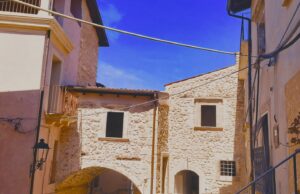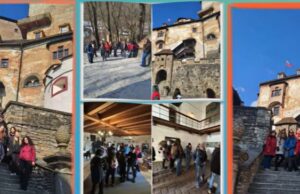



Tra le murature storiche dell’aggregato Petrucci Rosa – Urbana, nel centro di Navelli, le recenti operazioni di recupero hanno restituito tracce materiali che permettono di rileggere in chiave integrata le pratiche di assistenza, custodia e amministrazione tra età moderna e contemporanea. I lavori hanno riportato alla luce i resti di una ruota degli esposti, riconoscibile nelle aperture su strada oggi murate e negli ambienti di servizio adiacenti. Questo dispositivo, un congegno rotante inserito nello spessore murario, consentiva di affidare anonimamente i neonati al sistema pubblico, trasformando l’abbandono in protezione.
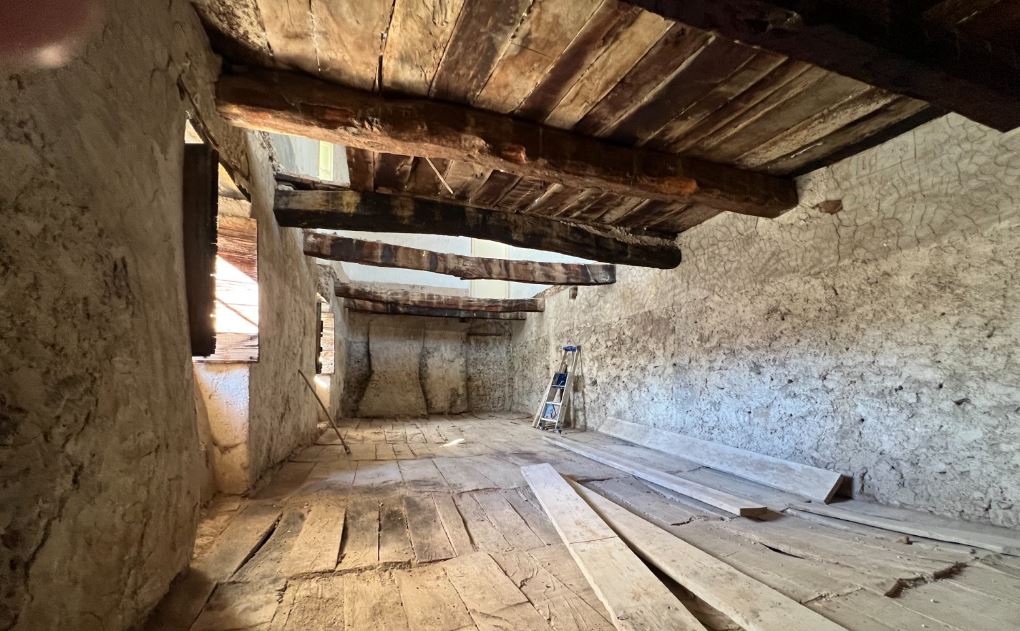
Accanto a questa dimensione assistenziale, l’aggregato mostra anche le evidenze di spazi di custodia e detenzione. Nei locali inferiori si osservano giacigli in muratura, camini incassati nelle pareti e vani terminali con cavità compatibili con latrine, elementi che attestano permanenze stabili. «A questi si affianca un documento d’archivio datato 21 giugno 1822, che attesta l’esistenza a Navelli di una “porta del carcere”, per la quale erano registrati interventi di manutenzione della chiave e del catenaccio», spiega il sindaco Paolo Federico. «Una documentazione giudiziaria continua tra 1859 e 1901, conservata presso l’Archivio di Stato dell’Aquila, registra inoltre omicidi, brigantaggio, furti e violenze nel comprensorio navellese».
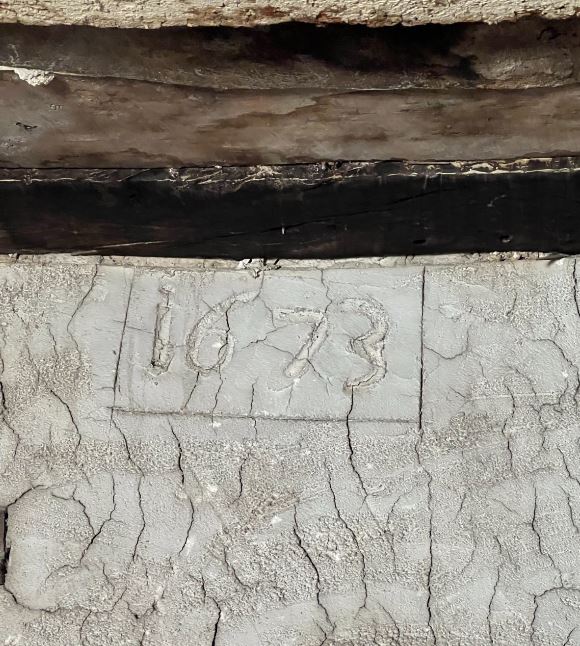
Un’incisione muraria con la data 1727 colloca l’edificio nella fase di ricostruzione successiva al terremoto dell’Aquila del 1703, suggerendo che proprio allora il complesso consolidò la sua funzione civico-assistenziale. Nel 1811, con la riorganizzazione amministrativa napoleonica, Navelli divenne centro del circondario di Capestrano, estendendo la propria giurisdizione su un territorio comprendente, tra gli altri, Civitaretenga, Capestrano, Collepietro, Ofena e Castelvecchio Subequo. In questo contesto, l’aggregato si conferma nodo strategico di governo, giustizia e controllo del territorio.
La ruota degli esposti, istituzione tipica del Regno di Napoli tra XVII e XIX secolo, non fu soppressa durante il periodo napoleonico (1806–1815), quando le opere pie furono regolate e integrate nel sistema civile. La sua dismissione avvenne solo dopo la legge Crispi del 17 luglio 1890, rendendo plausibile la sua funzione per tutto l’Ottocento, fino alla muratura dell’apertura tra fine XIX e primi anni del XX secolo.
Tra XVIII e XIX secolo, dunque, nello stesso complesso convivevano la casa comunale, le carceri e la ruota degli esposti, configurando un sistema unitario di funzioni civiche. «Quello che sta emergendo è un sistema coerente», osserva il sindaco Federico, «in cui assistenza, amministrazione e giustizia convivevano nello stesso luogo, dando forma concreta all’organizzazione della comunità». E aggiunge: «Questo complesso ha tutte le caratteristiche per diventare un vero attrattore culturale. Ogni pietra e ogni apertura racconta una storia di cura, disciplina e identità, pronta a parlare alle nuove generazioni».
Tra le mura di un edificio chiuso per quasi 17 anni riaffiora così il cuore civico di Navelli, capace di integrare per oltre due secoli autorità e umanità.
Foundling Wheel, Navelli Rediscovers Its Heart
Within the historic masonry of the Petrucci Rosa – Urbana complex, in the center of Navelli, recent restoration works have brought to light material traces that allow for an integrated reinterpretation of practices of assistance, custody, and administration between the modern and contemporary eras. The works have uncovered the remains of a foundling wheel, recognizable in the now-walled street openings and in the adjacent service rooms. This device—a rotating mechanism embedded within the thickness of the wall—allowed newborns to be anonymously entrusted to the public system, transforming abandonment into protection.
Alongside this welfare dimension, the complex also reveals evidence of spaces used for custody and detention. In the lower rooms, one can observe masonry sleeping platforms, fireplaces built into the walls, and terminal spaces with cavities compatible with latrines—elements that attest to prolonged occupancy. “In addition, an archival document dated June 21, 1822, confirms the existence in Navelli of a ‘prison gate,’ for which maintenance interventions on the key and latch were recorded,” explains Mayor Paolo Federico. “Continuous judicial documentation between 1859 and 1901, preserved at the State Archives of L’Aquila, also records homicides, brigandage, thefts, and acts of violence in the Navelli area.”
A carved inscription bearing the date 1727 places the building within the reconstruction phase following the 1703 L’Aquila earthquake, suggesting that it was precisely at that time that the complex consolidated its civic and welfare functions. In 1811, with the Napoleonic administrative reorganization, Navelli became the center of the Capestrano district, extending its jurisdiction over a territory that included, among others, Civitaretenga, Capestrano, Collepietro, Ofena, and Castelvecchio Subequo. Within this context, the complex emerges as a strategic hub for governance, justice, and territorial control.
The foundling wheel, an institution typical of the Kingdom of Naples between the 17th and 19th centuries, was not abolished during the Napoleonic period (1806–1815), when charitable institutions were regulated and integrated into the civil system. Its decommissioning occurred only after the Crispi Law of July 17, 1890, making its use throughout the 19th century plausible, until the walling up of the opening between the late 19th and early 20th centuries.
Thus, between the 18th and 19th centuries, the same complex housed the town hall, the prisons, and the foundling wheel, forming a unified system of civic functions. “What is emerging is a coherent system,” observes Mayor Federico, “in which assistance, administration, and justice coexisted in the same place, giving concrete form to the organization of the community.” He adds: “This complex has all the characteristics to become a true cultural attractor. Every stone and every opening tells a story of care, discipline, and identity, ready to speak to new generations.”
Within the walls of a building closed for nearly 17 years, the civic heart of Navelli thus re-emerges—capable, for over two centuries, of integrating authority and humanity.